
Module II
Inclusive AI
About this module
0:30
Learning outcomes
In this lesson we will take a look at the ability or willingness to adapt to unexpected situations and changes. The quality of being able to adjust to new conditions is one of the most important soft skills. At the end of the lesson, you will be able to:
- Appreciate the benefits of diversity and determine its' impact on teamwork
- Understand the importance of adaptability and acceptance in the workplace
- Explain the role of AI in the process of promoting diversity and inclusion
- List the ways in which AI can help foster an inclusive society and workplace
- Describe the role of AI in creating inclusion and list AI tools that improve accessibility
How you'll learn
During the lesson you have to read the written explanations and follow the given instructions at interactive elements. To achieve the designated learning outcomes Unique support you during the learning process by offering relevant training content, like media, interactive activities etc.
Accessibility and Inclusion in AI AI accessibility refers to the use of artificial intelligence technology to improve accessibility for individuals with disabilities. It involves developing and implementing AI solutions that address barriers and challenges faced by people with disabilities in various aspects of life.By leveraging AI capabilities, we can create inclusive environments and provide equal opportunities for everyone, regardless of their abilities.
Therefore, the use of AI can increase cultural and social inclusion. Social inclusion is defined as the process of improving the terms of participation in society, particularly for people who are disadvantaged, through enhancing opportunities, access to resources, voice and respect for rights.
The inclusive approach is based on the principles of equality and inclusion.
From a functionalist perspective, AI is enhancing opportunities for digital accessibility because of the various ways that people can interact with AI-powered tools to make them work. AI also has the potential to revolutionize digital accessibility by automating the creation of accessibility features and making them more personalized.
Accessibility & Inclusion For All
What is Digital Accessibility?
ections_artificial_intelligence_by_metamorworks_gettyimages-949321092_1200x800-100767997-l arge-100928072-large.jpg?auto=webp&quality=85,70 UaN6pnv4kHEsnqQT1r5Zcfq8hW9PRIqVz9U4&usqp=CAU e_Learning_-_30212411048.jpg
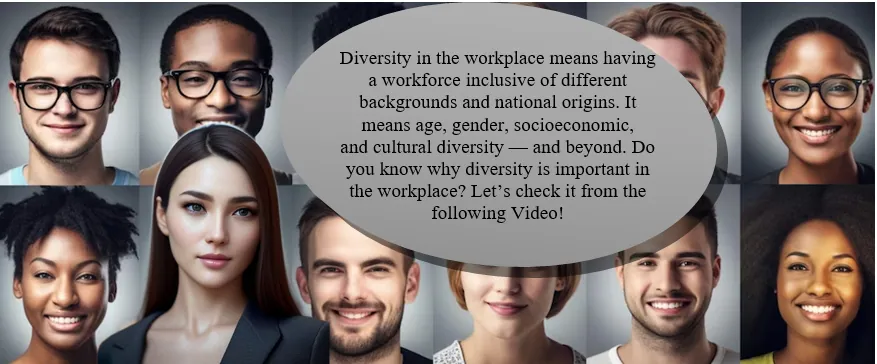
Diversity in the workplace
General Knowledge About Diversity, Acceptance and Adaptability in The Workplace The corporate or organizational culture is diverse for example when the employees of the company come from different countries with varied languages,racial or ethnic backgrounds, religions, levels of education, abilities or interests. Diversity in the workplace also means that the organization fosters a sense of belonging that makes everyone feel like they are part of the team.Diverse organizations are inherently happier, more productive, and more competitive in their industries.Studies have shown that groups of people that are diverse in gender, race and age perform better, make better decisions and experience more profitability. Diversity benefits organizations at all levels. Additional benefits of diversity in the workplace are the following:
- decreasing groupthink at work;
- new perspectives - increased creativity and innovation;
- wider talent pool - a diverse company will attract a broader range of candidates looking for a progressive workplace;
- enhanced problem-solving. hat-is-diversity-in-the-workplace? Diverse organizations are inherently happier, more productive, and more competitive in their
Why Workforce Diversity is Good for your Workplace The Benefits and Challenges of a Diverse Team
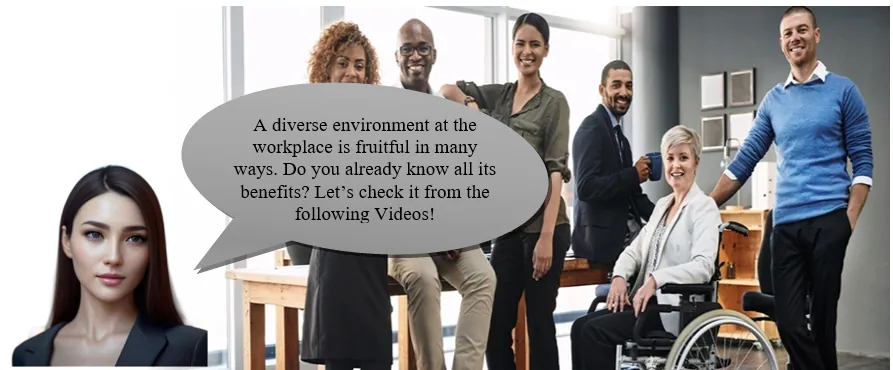
Accepting Diversity in the Workplace Means:
- greater loyalty, respect and trust;
- more open communication;
- healthier relationships. Thus, it is necessary for a company to find ways to accept diversity in departments and the organization as a whole. The Ways to Embrace or Accept Diversity in the Workplace are the Following: There are some basic strategies that we can implement straight away to promote diversity in the workplace:
- try to boost cultural competency - learn about different cultures, traditions;
- create a workplace where different perspectives are valued and embraced;
- treat others how they want to be treated - be considerate, sensitive and respectful;
- realize diversity and inclusion activities - celebrate different traditions;
- contribute to the cultural diversity of your workplace.
Adaptability is one of the most important soft skills which employers value and it has a positive influence on furthering the career. Adaptability means the ability to be flexible and adjust to changing factors, conditions or environments. It is a necessary quality in an ever-changing social, cultural, economic and work environment. Adaptability skills (like communication, quick learning, problem-solving, organization, decision-making, resourcefulness, leadership, and stress management) are important to have because they show employers that you can be trusted.
Let´s check your knowledge! What diversity, acceptance and adaptability in the workplace means? (True or False) Adaptability skills (like communication, quick learning,
Interactive activity
Inclusive AI: The role of AI in diversity and inclusion AI can foster an inclusive culture in the workplace by addressing communication, accessibility, and employee engagement. AI can help identify candidates based on their skills and performance metrics that represent diverse perspectives in leadership positions.
Inclusive AI means another subfield of ethical AI. This is AI which accounts for different needs, and therefore benefits all of society including minority, marginalised, and underrepresented groups.
AI technologies which can help foster a more inclusive work environment are:
- AI-driven recruitment tools: which can help to eliminate unconscious human bias and ensure a fair recruitment process for everyone;
- AI-based sentiment analysis tools: deploying AI for sentiment analysis in company communications allows us to identify and rectify exclusionary language or behaviour;
- Speech or voice recognition, text-to-speech, real-time transcription, and name pronunciation: are also possible applications of AI to promote accessibility in the workplace. For example, name pronunciation tools eliminate struggle with name pronunciation to prevent awkwardness and establish rapport quickly.
- Assistive Technology: devices, software or equipment that enhance learning, working or daily living for people with disabilities. For example, switch adapted devices belong among assistive technologies. They allow individuals with physical disabilities or motor planning problems the opportunity to play and learn as independently as possible. The proper switch will open up worlds of access to communication devices, environmental controls, computer software and mobile devices. Eye gaze technology is another example of assistive technology tools. It is an electronic device that allows a person to control a computer or tablet by looking at words or commands on a video screen. This technology is used for people who cannot control a computer or a tablet by standard methods such as a keyboard or a mouse. Augmentative and Alternative Communication Devices (or AAC) covers a huge range of techniques that support or replace spoken communication. It can involve unaided communication, such as sign language and aided modes like communication boards and books. AAC systems lend a voice to those unable to speak, allow them more autonomy and give them an increased sense of inclusion in the workplace.
- Assistive Technology: devices, software or equipment that enhance learning, working or daily living for people with disabilities. For example, switch adapted devices belong among assistive technologies. They allow individuals with physical disabilities or motor planning problems the opportunity to play and learn as independently as possible. The proper switch will open up worlds of access to communication devices, environmental controls, computer software and mobile devices. Eye gaze technology is another example of assistive technology tools. It is an electronic device that allows a person to control a computer or tablet by looking at words or commands on a video screen. This technology is used for people who cannot control a computer or a tablet by standard methods such as a keyboard or a mouse. Augmentative and Alternative Communication Devices (or AAC) covers a huge range of techniques that support or replace spoken communication. It can involve unaided communication, such as sign language and aided modes like communication boards and books. AAC systems lend a voice to those unable to speak, allow them more autonomy and give them an increased sense of inclusion in the workplace.
Assistive Technology
Another AI technologies which can help foster a more inclusive work environment are:
- Virtual assistant: is an independent contractor who helps with office management, provides administrative services to clients while operating outside of the client´s office. Virtual assistants typically work from a home office. They are extremely helpful to people with physical and cognitive disabilities (for example they can turn lights off and on without requiring anyone to move, they can help with online shopping or announce scheduled appointments and even recommend using ride-sharing service for transportation).
- Sensory technology applications: may be useful in the workplace to unobtrusively measure and monitor work exposure and provide workers with real-time feedback or access to data on demand.
- Touch Screen Technology: helps to increase workplace collaboration, improve communication with clients, employees and contractors based overseas and allow employees to utilise their creativity at work to help solve problems.
- Virtual Reality: computer modelling and simulation that enables users to interact with an artificial D3 visual environment. It is an effective and useful tool which helps to develop communication, creativity and teamwork in the workplace. It also supports understanding of complex concepts, subject or theories.
- Artificial intelligence (AI)-enabled apps: can help reduce barriers for differently-abled people to communicate and participate in everyday life. Some smartphone apps can scan and read images for visually impaired, or detect surrounding sounds and voices for hearing-impaired people, with situations transcribed continually in up to 48 languages.
- Sensory technology applications: may be useful in the workplace to unobtrusively measure and monitor work exposure and provide workers with real-time feedback or access to data on demand.
- Touch Screen Technology: helps to increase workplace collaboration, improve communication with clients, employees and contractors based overseas and allow employees to utilise their creativity at work to help solve problems.
- Virtual Reality: computer modelling and simulation that enables users to interact with an artificial D3 visual environment. It is an effective and useful tool which helps to develop communication, creativity and teamwork in the workplace. It also supports understanding of complex concepts, subject or theories.
- Artificial intelligence (AI)-enabled apps: can help reduce barriers for differently-abled people to communicate and participate in everyday life. Some smartphone apps can scan and read images for visually impaired, or detect surrounding sounds and voices for hearing-impaired people, with situations transcribed continually in up to 48 languages. These apps mean a revolutionized social interaction between people wo are able to hear and deaf people. Another app detects imagery through a smartphone´s camera and gives users an audio notification of what is in front of them. It measures distances, identify objects and vocalizes text.
The AI-technology can be applied in many different sectors and industries. One of the most challenging industries is tourism, especially inclusive tourism.
Diversity is a determining factor in the development of tourism.
For employees working in the field of tourism, workplace diversity is a daily challenge. Employees in the travel and tourism industry come from many different countries and vary in abilities, interests, languages, education and religions. They also vary in age from young people to older adults. On the other hand, every day they meet travellers of different ages, cultures, religions, disabilities or travellers that require special help. Therefore, the ability to adapt and accept diversity is an extremely important soft skill in the field of tourism. Employees in the sector of tourism (like cooks, waiters, cleaners, porters, tour guides, etc.) can develop their necessary soft skills with the help of various AI tools in order to better understand and provide high-quality service to a diverse and demanding clientele.
These tools can be:
- Educational platforms powered by AI: thanks to educational platforms employees with disabilities, language barriers, cultural differences can be a part of the same work team;
- Virtual tour guides and trip planners: give customers personalised travel experiences and help customers in the planning and booking of their trips;
- AI-powered smart room systems: are being used to offer personalized lighting, temperature, and entertainment;
- Smart Bathrooms: with voice assistant capabilities, water and energy usage reduction, automatic temperature controls, systematically sanitized pipes.
Let´s check your knowledge! The role of AI in diversity and inclusion (Notebook Quiz) Photos W2MATGXEF21B146NMT/200930-HardSkillsSoftSkills.png 06959354-copy.jpg d.jpg dit-NA-1024x597.jpg
- Explain the role of AI in the process of promoting diversity and inclusion;
- List the ways in which AI can help foster an inclusive society and workplace;
- Describe the role of AI in creating inclusion and list AI tools that improve accessibility. Main take-aways:
- Adaptability and acceptance are vital if you want to work well with colleagues with diverse abilities or with colleagues who have different cultural backgrounds and national origins;
- Accepting diversity in the workplace means more productive, competitive and innovative organization.
- By leveraging AI technology we can break down barriers and create a more inclusive society. Brief introduction of the next block: In the next block you will acquire new knowledge about ethical dimensions of green and inclusive AI. You will get skills how to use AI tools in harmony with ethical rules.
Interactive activity
End of module
Module complete
Continue when you're ready.