
Module IV
Ethical Decision-Making
About this module
In this module, we will explore the principles and frameworks that guide ethical decision-making in the development and use of artificial intelligence. This module helps you understand how ethical considerations shape AI technology. Let's dive into the world of ethical frameworks and real-world case studies in AI ethics. Source of the picture: https://www.beyond2060.com/ai-ethics/
Learning outcomes
In this lesson we will take a look at
- The importance of ethical frameworks in AI
- The practical application of ethical principles in AI through case studies. At the end of the lesson, you will be able to:
- Explore ethical frameworks and principles
- Analyze real-world case studies in AI ethics
- Engage in scenario-based interactions to understand practical applications
- Participate in interactive tasks to apply what you've learned
How you'll learn
During the lesson you will: • Read explanations and guidelines on ethical decision-making and frameworks in AI. • Engage with scenario-based interactions to understand practical applications. • Utilize media elements like YouTube videos with English voice narration. • Participate in interactive tasks to apply what you've learned.
Ethical Frameworks in AI
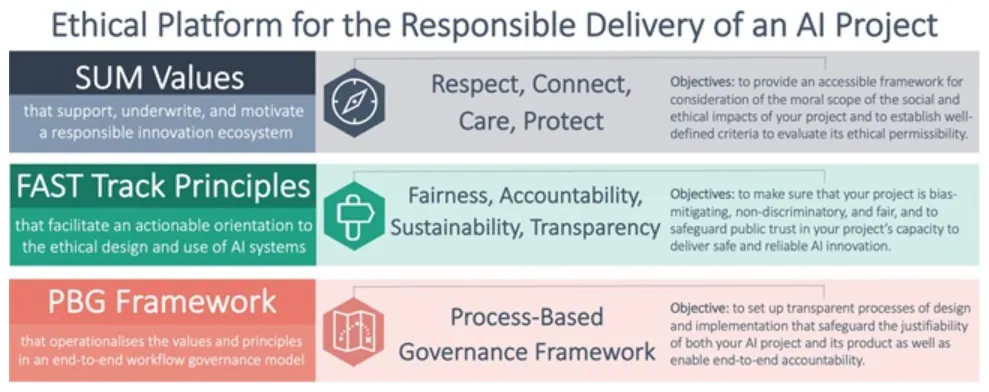
Imagine you're a software developer working on an AI project that involves automated decision-making. How would you apply ethical frameworks to ensure responsible and ethical AI development?
The next diagram might help you:
Source of the picture:
Watch a YouTube video titled " Ethical AI Frameworks Education" with English voice narration.
Explore the principles and ethical frameworks that guide decision-making in AI technology.
Understand how these frameworks provide a foundation for responsible AI development.
Source of the picture:
Source of the picture:
rk What is AI decision-making?
„AI decision-making refers to the process of using machine learning algorithms to make decisions based on input data. These algorithms are designed to identify patterns and make predictions based on data inputs, allowing for more efficient and accurate decision-making. AI decision-making can be applied in a variety of fields, including healthcare, finance, marketing, and even criminal justice.“ One of the main risks of AI decision-making is the potential for bias. Machine learning algorithms are only as unbiased as the data they are trained on, and if the data used to train an AI system is biased, the decisions made by the system will also be biased. (…) Another risk of AI decision-making is the potential for errors or unintended consequences. (…) Despite these risks, there are also a number of benefits to using AI decision-making processes. For example, AI systems can analyze vast amounts of data quickly and accurately, allowing for more efficient and effective decision-making. Additionally, AI systems can identify patterns and trends that may not be immediately apparent to human decision-makers.
Source:

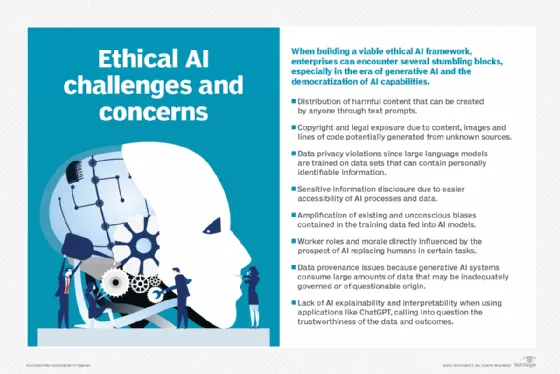
Discuss the possible risks and benefits of AI in decision-making using this picture.
Source of the picture:
Case Studies in AI Ethics
Explore real-world case study from the Modul 1 Block 2 (The case of an Uber driver in the YouTube video ) that highlight ethical dilemmas and challenges in AI technology. Analyse these cases to understand the practical application of ethical principles in solving the ethical dilemma of ethnical discrimination in AI.
Source of the picture:
d-on-religion-ethnicity-or-country-of-origin/
Watch a YouTube video titled " Neuralink Begins Human Testing!" with English voice narration.
predictable administrative issues (e.g. an overly ambitious or unsuitable combination of chosen courses, course scheduling) to external factors (e.g. balancing a job with school, domestic responsibilities), as well as previously unconsidered factors (e.g. poor nutritional options in the school cafeteria). Hephaestats then supplied teachers with profiles of at-risk students that helped them better understand why an individual student might be struggling and suggested targeted approaches for helping him or her.
(…) For example, students were encouraged to change some of their courses to make their schedules more manageable. Some of the most popular sugary foods were also removed from the cafeteria, and all teachers were instructed to provide more attention to struggling students, rather than the students who were already expected to do well.
(…) By the end of the 2016-17 academic year, Minerva High School appeared to have made an impressive turnaround. The four-year graduation rate had risen from 55 percent to 85 percent – a praiseworthy increase, according to the superintendent, that was distinctly higher than the district’s average. The dropout rate similarly improved, from nine percent to only five percent. Nearly all Minerva students now left school with their diplomas, and a higher percentage than ever before were being accepted to four-year colleges. (…) The seeming success of Hephaestats’ approach was overshadowed to some extent by concerns raised by students and their parents when they were finally told about Hephaestats’ involvement.
(…) Effective as Hephaestats had been in improving educational outcomes, this decision, delivered from above, made many students and their parents uncomfortable. Emboldened by their critiques, some teachers and administrators also began to publicly voice criticisms of and opposition to the new system.“ The following discussion questions have been formulated:
Source:
-3.pdf
Participate in discussions related to the case studies from the Media element and the Text content part of this block. Share your insights and ethical analysis of each scenario according to the following AI ethics principles:
- Human, social and environmental wellbeing
- Fairness
- Reliability and safety
- Transparency and explainability
- Accountability Main take-aways:
- Ethical frameworks provide guidance for responsible AI development.
- Real-world case studies illustrate the application of ethics in AI technology. Brief introduction of the next block: In the next block, you will explore emerging ethical challenges in AI and the role of regulation.
End of module
Module complete
Continue when you're ready.